Where Finance Is Being Rebuilt: The FinTech Elective in Singapore
Three days on the future of money
Most people in Singapore already bank on their phones, pay with a QR code and send money abroad in seconds. Few have had to ask what that convenience costs the institutions behind it, or who will own the customer relationship in ten years.
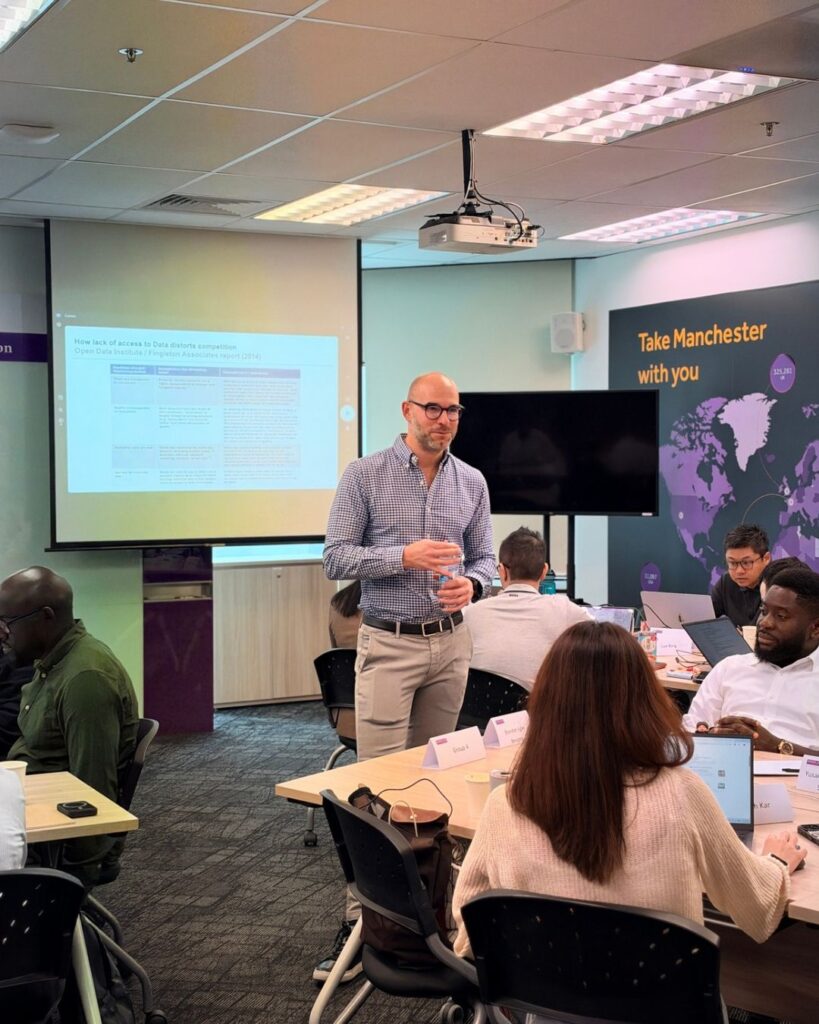
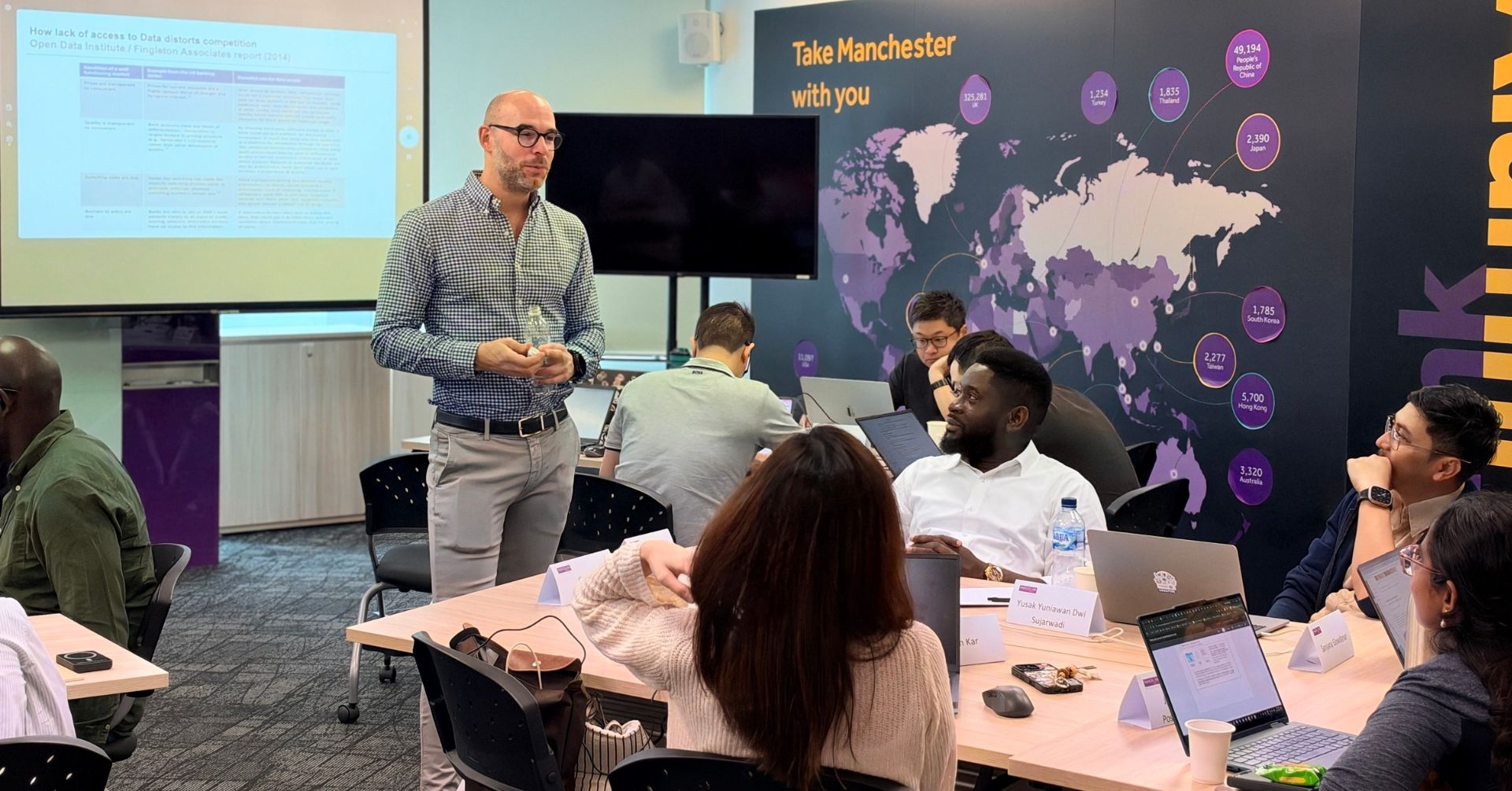
That question sat at the centre of the Financial Technology (FinTech), Digital Banking and Blockchain elective, held recently at the University of Manchester’s centre in Singapore. Over a three-day workshop, Manchester MBA students looked at how new technology is reshaping banking, payments and the transfer of value, and what that means for the organisations caught in the middle
A strategic question, not a technical one
It is tempting to treat fintech as a subject for engineers. The elective takes a different view. The technology matters, but the harder questions are about strategy: which customer expectations are changing, how regulation opens or closes a market, and where data creates an advantage that competitors cannot copy.
For an established bank, the challenge is to keep the trust and scale it already has while learning to move at the speed of a start-up. For a challenger, it is the reverse: winning customers quickly, then earning the trust and regulatory standing that incumbents took decades to build. Both sides need leaders who can judge a fintech proposition on its business model, not only on its technology
What the elective covers
The elective is led by Professor Markos Zachariadis, whose research focuses on fintech, digital banking and the economics of payments. It runs over two months: a three-day workshop supported by online learning. The workshop combines frameworks with case studies and examples from industry, across four areas:
Emerging technologies. Open APIs, blockchain, artificial intelligence and digital identity, and how each changes the way financial services are built and delivered.
Payments and value transfer. How money moves, who earns from moving it, and where new entrants are taking share.
The forces behind disruption. Regulation, changing customer expectations and business models built on data and platforms.
Incumbents and challengers. How banks respond to new competitors, and how they build the capability to keep innovating. Alongside this sits a set of practical tools for digital transformation: how to change an organisation’s structures, processes and culture so that new technology delivers results.
Alongside this sits a set of practical tools for digital transformation: how to change an organisation’s structures, processes and culture so that new technology delivers results.
Designing a bank in three days
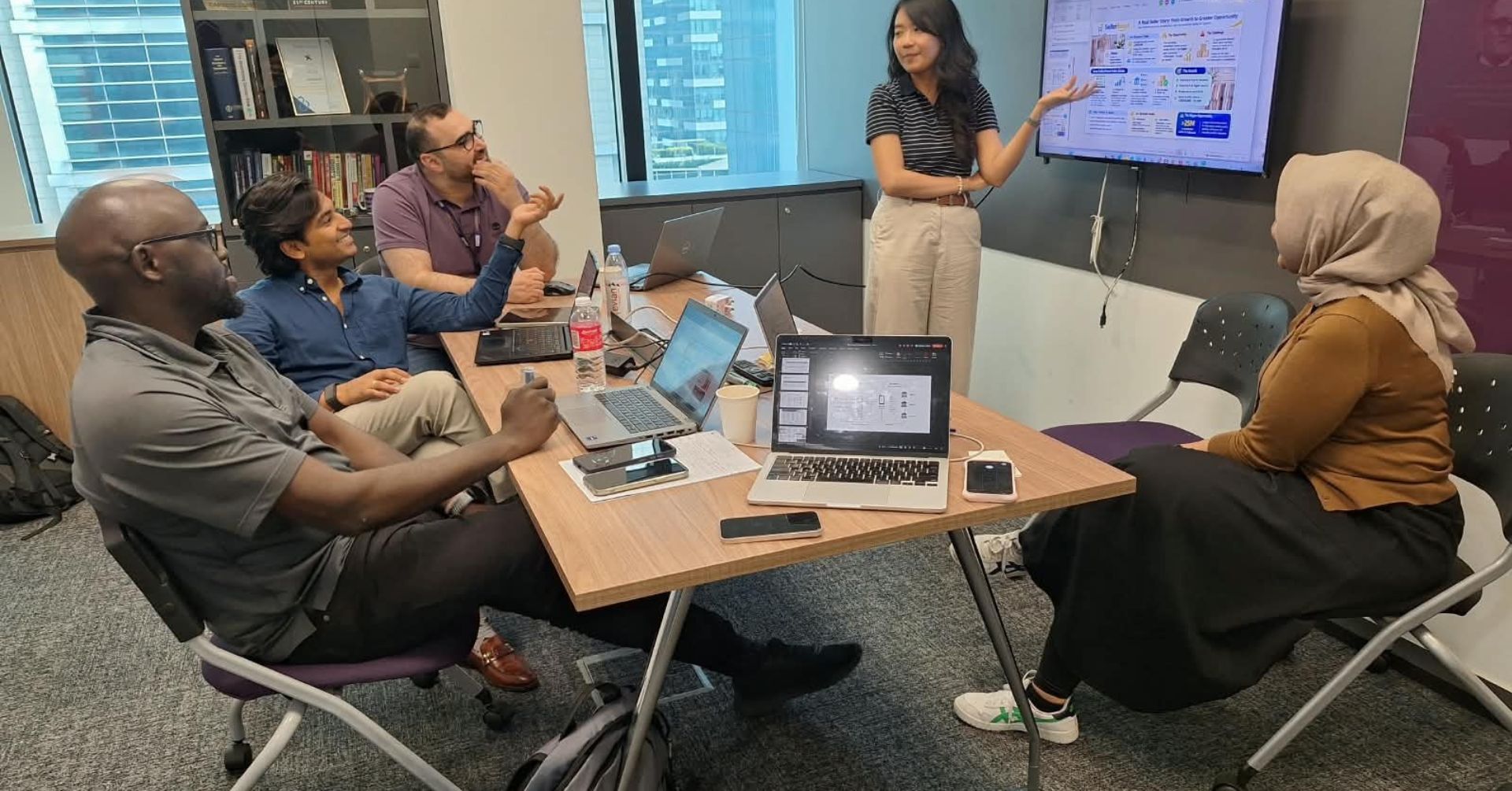
The workshop’s centrepiece was a hands-on digital banking challenge. Working in teams, students designed a digital banking concept and pitched it to the room.
The exercise brings the week’s ideas together under pressure. Each team had to decide which customer it was serving, what problem it solved better than existing banks, how it would make money and how it would satisfy a regulator. Each then had to persuade the room. Strategic, persuasive communication is one of the elective’s stated aims, and a pitch shows quickly whether a concept holds together.
Why Singapore suits the subject
Few cities offer a better setting for this discussion. Singapore is home to established regional banks, licensed digital banks and a large community of fintech firms, all operating under a regulator that has actively encouraged financial innovation. Many participants work inside this ecosystem, as customers, competitors or partners of the institutions being discussed.
That gives the case studies an immediate local test. A framework about incumbents and challengers lands differently when the people applying it deal with both every working day.
Leading through the change
Financial services will keep changing faster than most organisations can comfortably manage. The leaders who do well will be those who can see past the technology to the opportunities, risks and competitive dynamics underneath it, and then bring their organisations with them.
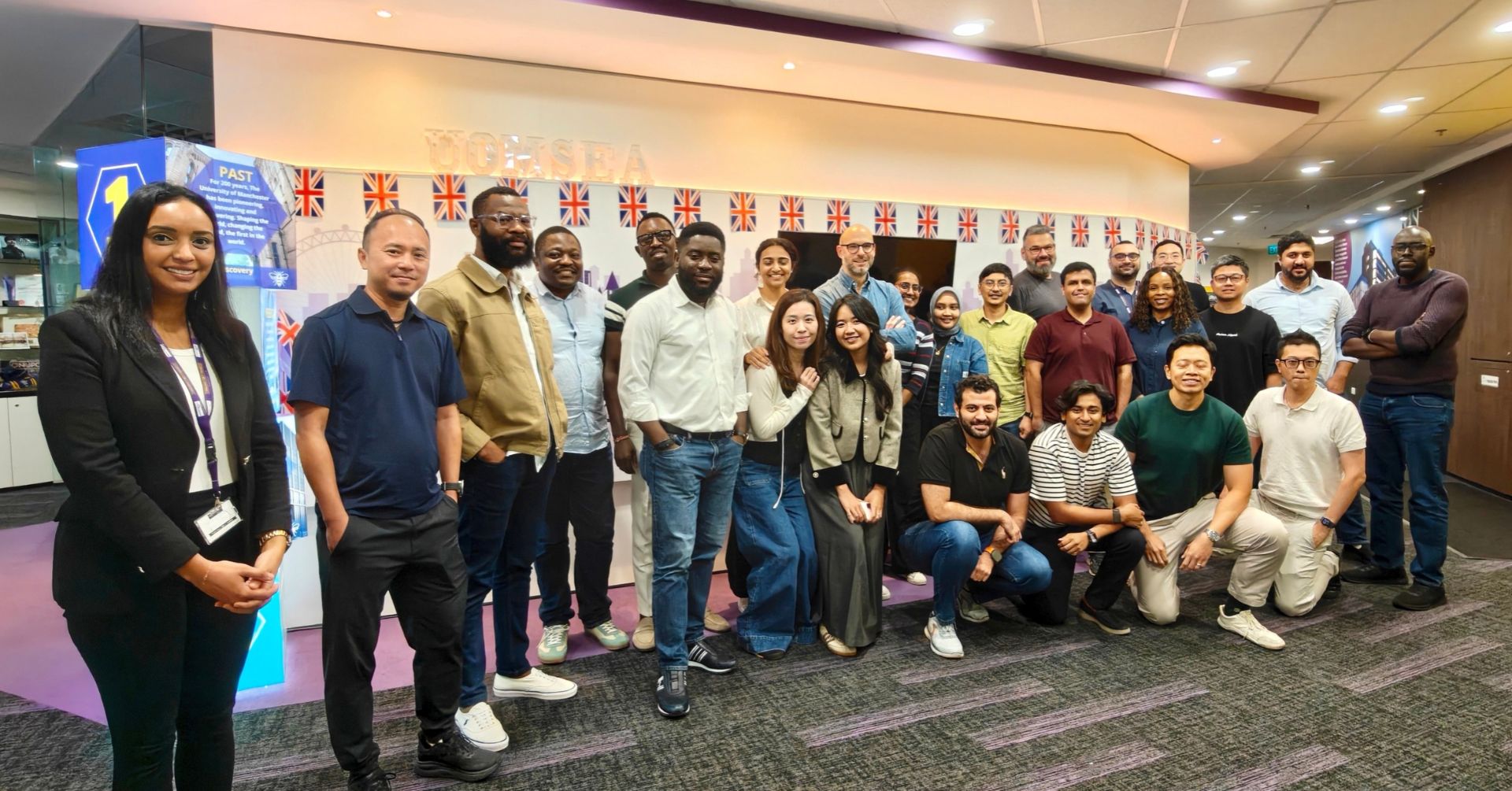
We thank Professor Zachariadis and every participant for three demanding and generous days at our Singapore centre. It is the University’s promise in practice: original thinking, applied
To find out more about studying an MBA with The University of Manchester in Singapore, attend an information session or contact us at mbaenquiries@manchester.edu.sg.
UoMSEA Hosts Masterclasses On Sustainable Finance… The University of Manchester South East Asia Centre (UoMSEA) reaffirmed its commitment to sustainable finance education by hosting two masterclasses in Kuala Lumpur, led by…